When hunters talk about a Saskatchewan trophy whitetail deer, they are usually talking about more than simply a deer with a large rack. A true trophy whitetail is the result of several factors coming together over time — including age, genetics, nutrition, habitat and environmental conditions.
Saskatchewan has earned a reputation for producing some exceptional whitetail deer. The province's combination of fertile agricultural land, abundant food sources, diverse cover and large expanses of relatively lightly developed habitat can provide excellent conditions for mature bucks.
But what actually makes a big Saskatchewan whitetail?
The answer is not just genetics, and it is not simply a matter of getting old. Trophy potential develops through the interaction of several important factors.
What Is a Saskatchewan Trophy Whitetail Deer?
There is no single characteristic that defines a trophy whitetail.
For many hunters, antler size is the most obvious measure. A mature buck with heavy beams, long tines, good mass and wide, symmetrical antlers may immediately stand out as a trophy.
A 150 inch whitetail Saskatchewan hunters would consider exceptional, for example, has developed a combination of antler characteristics that place it well above an average buck.
However, trophy quality can also mean the overall experience of hunting a mature deer. A heavy-bodied, fully mature Saskatchewan buck with impressive antlers can be a trophy regardless of whether it reaches a particular score.
Several factors contribute to that potential:
Age
Genetics
Nutrition
Habitat
Body condition
Winter severity
Overall health
The opportunity to reach maturity
These factors work together throughout a buck's life.
1. Age Is One of the Most Important Factors
One of the biggest differences between an average young buck and a true mature Saskatchewan whitetail is simply time.
A buck needs multiple years of growth before it reaches its full physical and antler potential. Young bucks may carry impressive antlers, but a mature buck has had more opportunities to develop larger beams, greater antler mass and more substantial tine length. This is one reason mature bucks are so highly valued by experienced whitetail hunters.
Age also affects body size. As a buck matures, changes in body structure and muscle development can make an older deer look dramatically different from a young buck, even before the antlers are considered.
Why maturity matters for antlers
Antler development is an annual process. A buck grows a new set of antlers each year, and the size and configuration of those antlers can change considerably as he matures.
A young buck may have:
Shorter main beams
Limited tine length
Less mass
Fewer points
Narrower spread
As he matures, he may develop:
Longer main beams
Heavier bases
Greater antler mass
Longer tines
Wider spread
More symmetrical structure
That does not mean every older buck will become a giant. Age creates the opportunity for development, but genetics and nutrition determine how much of that potential can be expressed.
2. Genetics Set the Ceiling for Trophy Potential
Saskatchewan whitetail deer genetics are another important piece of the puzzle.
Every buck inherits genetic characteristics from its parents that influence traits such as body size and antler development. Some deer simply have greater genetic potential for producing large, heavy antlers than others. This is why two bucks living in exactly the same habitat and eating essentially the same food can develop noticeably different racks. One may eventually become a wide, heavy-antlered mature buck while another remains comparatively modest.
Genetics do not work alone
It is important not to overstate the role of genetics. A buck may have excellent genetic potential but never express it fully if he experiences poor nutrition, severe winters, injury or other stresses during important periods of development. The reverse is also true. Excellent habitat can help a genetically average deer reach its individual potential, but good food alone cannot turn every buck into a record-book animal. Think of genetics as setting the potential and environmental conditions as helping determine how much of that potential is realized.
3. Nutrition Fuels Antler Growth
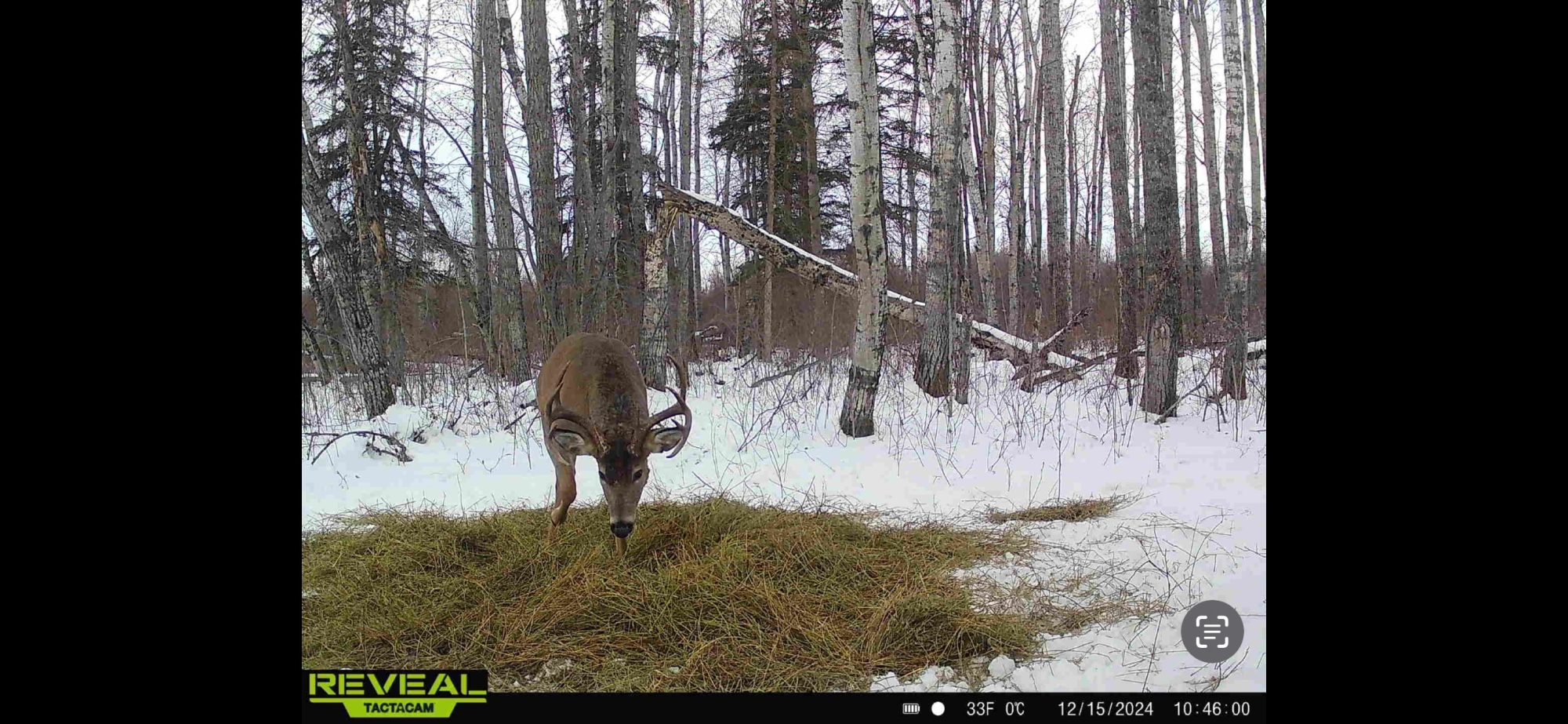
Food is one of the most important environmental factors influencing whitetail development, food supply can significantly affect survival, reproduction, body size and antler scores in whitetail deer. Meeting nutritional requirements throughout the year helps bucks grow antlers toward their genetic potential. That is particularly important during the spring and summer growing season. During this period, bucks are putting significant resources into antler development. High-quality forage provides the energy, protein and minerals required for growth.
Saskatchewan's agricultural landscape can be particularly beneficial because whitetails may have access to a combination of natural browse and agricultural crops. Depending on location and season, deer may utilize:
Alfalfa
Cereal crops
Forbs
Grasses
Aspen
Willow
Saskatoon Berries
Chokecherry
Snowberry
Other forage shrubs and bushes
Alfalfa is a highly preferred forage for whitetail deer as it contains high protein and calcium.
Summer nutrition is especially important
A buck does not begin growing his antlers in the fall. Antler growth occurs primarily during spring and summer, meaning the nutritional conditions during those months can have a major influence on the finished rack. This is one reason productive Saskatchewan whitetail habitat can be so valuable.
A landscape that provides abundant, high-quality food during the growing season gives deer an opportunity to maintain good body condition while developing antlers.
4. Habitat Provides More Than Food
Excellent whitetail habitat is not simply a food plot. A productive Saskatchewan whitetail environment provides a combination of:
Food + cover + water + security + winter shelter
Whitetail deer are strongly associated with areas where different habitat types meet. A region containing agricultural fields beside bush, creek bottoms, coulees, wetlands or other cover can provide many of the resources deer need throughout the year.
Cover is critical
Trees and shrubs provide:
Bedding cover
Escape cover
Thermal protection
Fawning habitat
Travel corridors
Winter shelter
Natural forage
Whitetail deer rely heavily on trees and shrubs for food and shelter, particularly during severe winter conditions. This combination of food and cover is one reason Saskatchewan's agricultural and forest-edge landscapes can be so productive for whitetails.
5. Saskatchewan's Agricultural Landscape Can Be a Major Advantage
One of the defining characteristics of Saskatchewan whitetail country is the mixture of agriculture and natural habitat. Large agricultural areas can provide abundant high-energy food, while adjacent bush, river valleys, shelterbelts and other natural areas provide security and bedding cover. That creates an ideal arrangement for deer.
A buck can spend part of the day in cover, travel through natural corridors and feed in agricultural areas when conditions are favorable. The result is a landscape where deer can potentially obtain both the nutrition and security necessary to reach maturity. This is particularly important when looking fortrophy whitetail hunting Saskatchewan opportunities.
6. Winter Conditions Matter
A Saskatchewan winter can be demanding for a whitetail. Deep snow, extreme cold and limited food availability can force deer to use substantial energy simply to survive. A buck that enters winter in excellent physical condition has an advantage over one that begins the winter already stressed or undernourished. Winter severity can therefore influence the condition of the deer population and the ability of individual bucks to maintain themselves until spring. The quality of winter habitat matters as well.
Dense bush, mature trees and sheltered areas can reduce exposure to wind and snow and provide access to browse when agricultural food sources are unavailable.
Why Saskatchewan's winters are part of the story
It may seem counterintuitive, but the harshness of the environment is part of what makes Saskatchewan whitetail hunting so interesting. These deer live in an environment where survival requires adaptation and access to quality habitat. The mature bucks that successfully navigate several Saskatchewan winters have demonstrated not only age but also the ability to survive challenging conditions.
7. Body Size and Antler Size Are Related — But Not Identical
A common misconception is that the biggest-bodied buck must automatically have the biggest antlers. That is not necessarily true. Body size and antler size are influenced by some of the same factors, including age, genetics and nutrition, but they are not perfectly correlated. A mature buck can have a large body and relatively modest antlers.
Another buck can carry an exceptionally impressive rack without being the largest-bodied deer in the area. For hunters searching for aSaskatchewan trophy whitetail, this is an important distinction. Don't judge a buck solely by body size or solely by antler width. Look at the complete animal.
8. What Makes a 150-Inch Whitetail in Saskatchewan Special?
A 150 inch whitetail Saskatchewan hunters dream about is not simply a deer that happened to survive long enough to become old. To reach that level of antler development, a buck generally needs a favorable combination of:
Good genetic potential
Several years of age
Consistent nutrition
Good overall health
Favorable habitat
The opportunity to survive through multiple hunting seasons
Antler scoring systems measure characteristics such as main beam length, tine length, circumference and inside spread. A buck can achieve an impressive score through different combinations of these characteristics. For example, one buck may be exceptionally wide while another carries more mass and tine length. That is part of what makes trophy whitetails so fascinating: no two mature bucks are exactly alike.
9. Habitat Diversity Can Be More Valuable Than a Single Food Source
When evaluating trophy whitetail hunting Saskatchewan, it is tempting to focus exclusively on where deer feed. But the best habitat often provides a variety of resources close together. Consider a territory that contains:
Agricultural fields
Aspen or poplar stands
Dense shrubs
Creek or river bottoms
Wetlands
Grasslands
Shelterbelts
Secluded bedding areas
That diversity can give deer choices throughout the year. A mature buck may use different portions of the landscape during different seasons and even different times of the day. For a hunter, understanding those movements can be just as important as understanding the food source itself.
10. The Opportunity to Reach Maturity Is Critical
Perhaps the most overlooked ingredient in producing a big Saskatchewan whitetail is simply allowing bucks to get old. A genetically gifted buck cannot become a mature trophy if he is harvested when he is young. That makes age structure an important consideration in any trophy whitetail population. Saskatchewan's wildlife management system uses population surveys and hunter harvest information to help inform hunting regulations and wildlife management decisions.
For hunters, the practical lesson is straightforward:
A trophy buck needs time.
That time allows genetics, nutrition and habitat to work together.
How All Four Factors Work Together
The easiest way to understand trophy whitetail development is to think about the four major ingredients as a system.
Genetics
Determines the buck's potential.
Age
Provides the time necessary for that potential to develop.
Nutrition
Provides the energy, protein and minerals needed for growth.
Habitat
Provides the food, cover and security needed for the deer to survive and remain healthy.
Remove one of these factors and trophy potential can be reduced. A buck with excellent genetics but poor nutrition may never reach his potential. A well-fed buck with poor genetics may never produce an exceptional rack. A genetically gifted and well-fed buck that is harvested young never gets the opportunity to become a mature trophy. And even an excellent buck needs suitable habitat to survive Saskatchewan's environmental challenges.
Why Saskatchewan Continues to Attract Trophy Whitetail Hunters
Saskatchewan offers a combination that serious whitetail hunters find compelling: productive agricultural land, extensive natural cover, diverse habitat and the potential for mature bucks.
The province's whitetail deer are part of a subspecies (Dakota white-tailed deer) recognized for large body and antler size, and Saskatchewan's agricultural landscapes can provide substantial food resources.
That does not mean every Saskatchewan property holds a giant buck.
Instead, it means the province contains the ingredients necessary to produce exceptional deer when genetics, habitat, nutrition and age come together.
For hunters pursuing a Saskatchewan trophy whitetail, finding those combinations is the real challenge.
What Hunters Should Look for in a Mature Saskatchewan Whitetail
When you're evaluating a buck in the field, don't focus only on the number of points. Look at the entire deer.
Signs of maturity can include:
A deep chest
A thick neck, particularly during the rut
A heavy, muscular body
A larger-than-average head
A sagging belly or back in very mature deer
Heavy antler mass
Long main beams
Developed tine length
Overall antler symmetry
None of these characteristics alone proves a buck's age. Field judging is an estimate, and body appearance can change considerably depending on season, nutrition, posture and perspective.
But together, they can help an experienced hunter distinguish a mature buck from a younger deer.
The Search for a Saskatchewan Trophy Is About More Than Antlers
For many hunters, the appeal of Saskatchewan trophy whitetail deer goes far beyond inches of antler.
It is the opportunity to pursue a mature animal in a landscape where deer have adapted to long winters, changing seasons and a mixture of agricultural and natural habitat.
A true Saskatchewan trophy is the product of years. Genetics provide the potential. Nutrition provides the building materials. Habitat provides the resources and security. Age provides the time.
When all four come together, the result can be the kind of mature Saskatchewan whitetail that hunters dream about long before they ever step into the field.
Hunt for a Saskatchewan Trophy Whitetail with Mistatim Outfitting
For hunters looking for a genuine trophy whitetail hunting Saskatchewan experience, choosing the right area and outfitter matters. Our whitetail territory has had only very limited outfitting activity in the years prior to 2026, leaving the whitetail to advance, grow and develop.
Mistatim Outfitting operates in Saskatchewan whitetail country where mature bucks, agricultural food sources and natural habitat come together to create the opportunity for exceptional deer.
If your goal is to pursue a big Saskatchewan whitetail, understanding what makes these deer grow is the first step. The next is finding the right habitat and putting yourself in position to encounter a mature buck.
Learn more about Saskatchewan whitetail hunts with Mistatim Outfitting and start planning your next Saskatchewan deer hunting adventure.